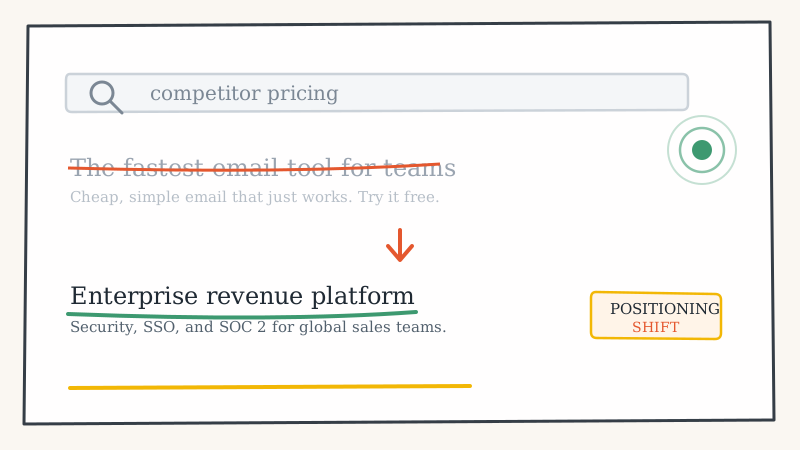
The meta title and meta description are the two lines a competitor writes for Google, not for their own homepage. They are the blue headline and the gray sentence under it in the search results, the text a buyer reads before deciding whether to click. Almost nobody on a competitive intelligence team watches them, which is exactly why they are one of the highest-signal, lowest-noise things you can monitor.
Here is why they matter more than the visible copy on the page. A competitor can spend a quarter debating a homepage redesign, but a marketer can rewrite a meta description in ten minutes and ship it the same afternoon. That means the snippet is where positioning gets tested first. When a competitor decides to reposition from “cheap and fast” to “enterprise and secure,” the meta title and description often change weeks before the hero headline, the pricing page, or the sales deck catch up. If you are watching the snippet, you get the earliest possible read on where they are trying to go.
This post explains what a meta title and description actually are, why a change to them is a strategy signal, exactly which pages to watch, and how to turn a detected snippet change into a sales and marketing move.
What meta titles and descriptions actually are
Every page on a website has two hidden pieces of text in its source code that Google and other search engines use to build the search result:
- The meta title. This is the clickable blue headline in search results. In the page source it lives in the title tag. It is usually the single most keyword-loaded, most carefully chosen line a marketing team writes, because it drives both ranking and click-through.
- The meta description. This is the gray summary sentence under the headline. In the source it is a meta tag with the name attribute set to description. It rarely affects ranking directly, but it heavily influences whether a searcher clicks, so it is a pure statement of how a company wants to sell the page.
Neither of these is visible when you look at the page in a browser. You have to view the page source or use a tool. That invisibility is the whole point: because these lines never show up on the rendered page, marketing teams edit them freely and often, treating them as a low-risk place to experiment with messaging. They are the sketchpad where positioning gets drafted before it becomes a redesign.
Why a snippet change is a strategy signal
A meta title or description rarely changes by accident. When it changes, it is because someone decided the old words were selling the wrong thing. Map the change back to intent and it becomes intelligence you can act on.
Here are the shifts worth reading closely:
- A keyword swap. If a competitor’s homepage title changes from “email marketing software” to “revenue platform,” they are repositioning into a bigger, more expensive category. They are chasing different buyers and a different budget line, and they will start showing up against a new set of competitors, possibly you.
- A move upmarket. When descriptions start dropping words like “simple,” “affordable,” and “for small teams” and pick up “enterprise,” “security,” “SSO,” and “compliance,” the company is trying to look safe to a procurement committee. That is one of the most reliable early signs a competitor is going after larger deals.
- A benefit-to-outcome shift. A description that changes from listing features to promising a business outcome (“book more meetings,” “close faster”) usually means the marketing team has adopted a sharper, more mature value proposition. That new language will show up in their outbound and their sales calls next.
- A defensive rewrite. If a competitor suddenly stuffs your category or your brand-adjacent keywords into their titles, they are trying to intercept searches that used to belong to you. That is a direct competitive play, and it is worth a same-week response.
- A fresh page focus. New meta titles appearing on pages that used to be generic often mean the competitor is investing in a new content or product line. The snippet is the first place that investment becomes visible.
None of these are announced. But the snippet is edited in the source code and served to every visitor and every crawler, which makes it trivial to detect automatically. That is why continuous website monitoring with a tool like CAM beats manually viewing page source once a quarter. The change is sitting in the HTML for days or weeks before it shows up in rankings, ads, or a sales conversation.
Which pages and tags to watch
You do not need to monitor every meta tag on every page. A small set of high-signal targets carries almost all the meaning.
The homepage title and description
The homepage snippet is the compressed summary of the entire company’s positioning. When it changes, the whole story changed. Watch the title tag and the description meta tag on the root URL first, because a shift here is the loudest possible signal.
The pricing page snippet
The pricing page description often reveals packaging and audience before the visible pricing does. A description that starts mentioning “custom” or “enterprise” plans is a hint that a new tier is coming or that the company is steering buyers toward sales-led deals.
Category and product page titles
These titles are the most keyword-sensitive on the site. A change here shows you which search terms the competitor has decided to fight for. Track them to see the exact keywords they are moving toward or abandoning.
The Open Graph and Twitter title tags
Alongside the standard meta tags, most pages carry Open Graph and Twitter title and description tags that control how a link looks when shared in Slack, LinkedIn, or a text. These are a separate surface, and they sometimes carry punchier, more aggressive messaging than the search snippet. A change here confirms the new positioning has reached the social sharing layer.
How to monitor snippet changes without checking source by hand
Opening view-source on a dozen competitor pages every week does not scale, and the meaningful changes are exactly the subtle wording shifts you would skim past. The reliable approach is automated, continuous monitoring that watches the specific tags and alerts you the moment the text changes.
A practical setup looks like this:
- Track the source of key pages, not just the rendered view. Point your monitoring at the homepage, pricing page, and top category pages, and watch the raw HTML so title and description changes are captured even though they never appear on screen.
- Focus on the tags that carry meaning. The title tag, the description meta tag, and the Open Graph and Twitter equivalents are where positioning lives. Narrowing to these keeps the signal clean.
- Filter out the noise. You do not want an alert every time a build hash, a tracking parameter, or a timestamp changes in the source. This is where a monitoring tool with a smart change filter matters, so you only hear about real wording changes. CAM is built to watch competitor pages continuously and alert you only when something meaningful actually changes, so a rewritten title reaches your team the same day instead of next quarter.
- Route alerts to where the team works. Send snippet changes to a shared competitive intelligence channel so marketing, sales, and product all see the new positioning at the same time and can react together.
The goal is to shrink the gap between when a competitor rewrites their pitch in the page source and when your team can respond, from months down to hours.
Turning a detected snippet change into action
Catching the edit is only half the value. The rest is moving before the new positioning hardens.
For marketing. A new competitor snippet is a live look at the language they are about to run everywhere. If they moved into your category keywords, update your own titles and comparison pages the same week so you are not ceding the search result. If they abandoned a positioning, decide whether to claim the ground they left behind.
For sales. A snippet change is an early warning that the competitor’s pitch is shifting. When you know they are moving upmarket, you can lean into your fit with the smaller buyers they are quietly leaving behind. Pairing positioning signals with outbound timing tools like Kali lets you reach the accounts most likely to be unsettled by the change while the competitor is still mid-transition.
For product and strategy. Read the snippet change alongside your other signals. A meta description moving toward “enterprise” and “security,” combined with new compliance pages and enterprise-focused hiring, is a coherent story: they are chasing bigger deals. One data point is noise. Three aligned signals are a strategy you can plan against. When you keep your own go-to-market list clean with prospect and outreach data from tools like Scrubby, you can act on the opening instead of just noticing it.
The bottom line
The meta title and description are where a competitor drafts their next positioning in public, in code, weeks before it reaches the homepage or the sales team. They are cheap to edit, so they change often, and they are invisible on the page, so almost nobody watches them. That combination makes them one of the best early-warning signals in competitive intelligence.
Pick the handful of pages that carry real weight, the homepage, the pricing page, and your top shared category pages, and put their title and description tags under continuous monitoring. When the wording changes, treat it as the positioning signal it is, and move while the competitor is still writing the rest of the story.