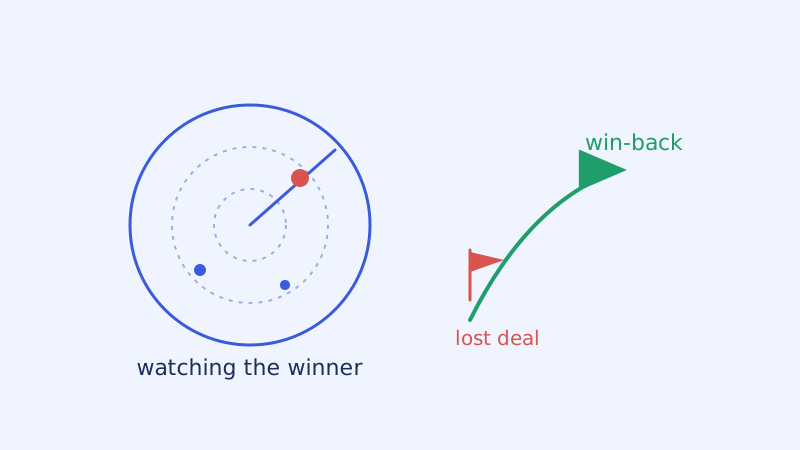
You ran a clean process, the prospect liked you, and they still picked the other vendor. The deal goes into the CRM as closed-lost, the rep moves on, and the account effectively disappears from your radar. That last part is the mistake.
A deal lost to a competitor is not a dead account. It is an account where you now know exactly who the incumbent is, roughly when the contract renews, and what the buyer cared about. That is a better intelligence position than you have with most cold prospects. The trick is to keep watching the competitor who won, because the signals that reopen the door almost always come from their side, not the customer’s.
Here is how to turn a loss into a monitored win-back pipeline.
Why the winner is the thing to watch
After a loss, sales teams instinctively want to monitor the customer for renewal timing. Useful, but the customer rarely advertises dissatisfaction until they are already shopping again. The competitor, on the other hand, broadcasts the conditions that create dissatisfaction long before the customer feels it.
When the incumbent raises prices, ships a disruptive product change, has an outage, loses the executive who championed your buyer’s use case, or gets acquired, that is when a happy customer becomes a reachable one. If you are only watching the customer, you find out after they have re-evaluated. If you are watching the competitor, you find out in time to be the call they take.
The signals that reopen a closed-lost
Set up monitoring on the winning competitor for the specific events that historically loosen accounts:
- Pricing and packaging changes. A price increase or a re-tiering that pushes your prospect into a more expensive bracket is the single most reliable re-entry signal. Track their pricing page for changes.
- Status-page incidents and downtime. A run of outages erodes trust fast, especially for the buyer who chose them partly on reliability. Monitoring a competitor’s status page turns their bad week into your warm intro.
- Product direction shifts. A pivot, a deprecated feature, or a roadmap that drifts away from your prospect’s core use case reopens the gap you lost on.
- Funding, acquisition, or layoffs. An acquisition often means support degrades and pricing changes; layoffs can mean the account team your buyer trusted is gone.
- Leadership and hiring changes. If the competitor stops hiring for the product line your prospect bought, or loses the leader behind it, momentum is shifting.
- Review and sentiment shifts. A wave of new negative reviews mentioning the exact pain your prospect cares about is a talking point handed to you.
Each of these is a public signal. The problem is that no human is going to check a competitor’s pricing page, status page, review profile, and careers page every day across every account you lost. That is what automated monitoring is for. A platform like CAM watches competitor websites, pricing pages, status pages, and other public sources and alerts you when something actually changes, so a price hike at the vendor who beat you becomes a notification instead of a thing you find out about a quarter too late.
Build the win-back monitoring list deliberately
Do not monitor every competitor for every lost deal at the same intensity. Prioritize:
- Tag closed-lost deals by winning competitor in your CRM so you can group accounts by incumbent. Ten losses to the same competitor become one monitoring target with ten payoffs.
- Note the loss reason and the renewal estimate on each. The loss reason tells you which competitor signal matters most for that account (a price-sensitive loss cares about pricing changes; a reliability loss cares about outages).
- Set monitors on the high-value incumbents first. Watch the pricing page, status page, and review profile of the competitors who beat you most often or on your biggest deals.
When a monitored signal fires, route it to the rep who owned the original deal with the context attached. They are re-entering a relationship, not cold-calling, which means the outreach is warm and specific.
Time the re-approach, then make it easy to say yes
A signal is permission to reach out, not a script. Lead with the buyer’s original priority, reference what changed on the incumbent’s side without trash-talking, and offer a low-friction next step. The goal of the first touch after a loss is a short conversation, not a full re-pitch.
Getting that conversation booked is its own challenge, because a prospect who already chose someone else will not eagerly reply to a cold email. This is where reaching them through a channel that does not depend on inbox placement helps. A calendar-based outreach approach like Kali puts a concrete, low-commitment meeting request in front of the buyer at exactly the moment your monitoring told you the incumbent stumbled, which converts far better than another email into a crowded inbox.
The takeaway
Closed-lost to a competitor is the beginning of a monitoring relationship, not the end of an opportunity. The events that hand you a second chance (price hikes, outages, pivots, acquisitions, leadership churn) happen on the competitor’s side and are almost all public. Tag your losses by who won, monitor those winners for the signals that match each loss reason, and have a warm, timely re-approach ready. The reps who win deals back are not lucky; they are the ones still watching after everyone else marked the account dead.