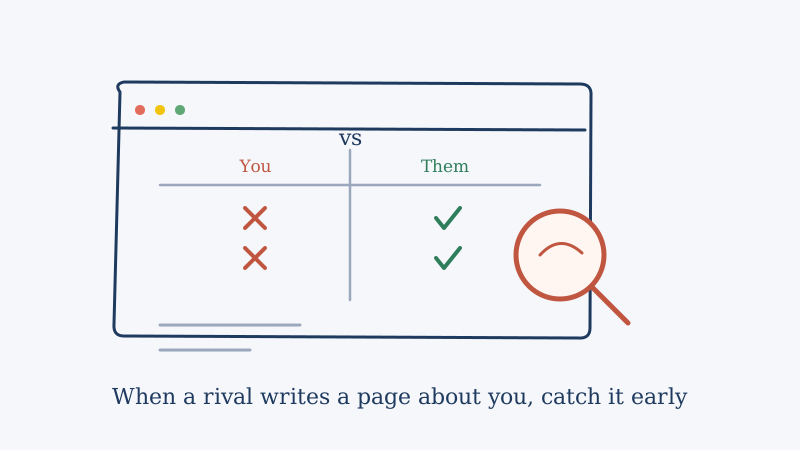
There is a specific kind of competitive move that costs deals quietly, for months, before anyone on your team notices it. A competitor publishes a comparison page. The URL is something like /compare/your-brand or yourrival-vs-you, and the headline is a polite version of “why customers choose us over them.” It ranks for your own brand name plus the word “alternative” or “vs,” and it starts catching your prospects at the exact moment they are trying to decide.
You usually find out about this the worst possible way: a rep loses a deal, does the post-mortem, and the buyer mentions “we read a comparison that made us nervous about X.” By then the page has been live for a quarter, it has accumulated backlinks and search authority, and it has already shaped how an unknown number of your prospects think about you. The page was public the whole time. Nobody was watching for it.
Comparison pages are one of the highest-intent competitive signals on the open web, and they are almost never monitored. This is how to catch them the week they go live instead of the quarter they cost you a deal.
Why comparison pages matter more than most competitive signals
A homepage refresh is positioning. A pricing change is strategy. But a comparison page that names you specifically is an act of direct interception, and it is aimed at the most valuable traffic your competitor can find.
- It targets bottom-of-funnel buyers. Nobody searches “brand A vs brand B” casually. They search it with a credit card halfway out, comparing two finalists. A competitor who owns that search result is influencing the decision at the moment of maximum leverage.
- It compounds over time. Comparison pages are built for SEO. They accumulate authority, internal links, and ranking strength month over month. The longer one sits unanswered, the harder it is to outrank, and the more of your branded search real estate it quietly claims.
- It reveals their attack narrative. A comparison page is your competitor telling you, in writing, exactly which of your weaknesses they think they can beat you on. That is free positioning intelligence, handed to you, if you are reading it.
- It signals where they are investing. A company only bothers to build a dedicated page about you when they consider you a real threat in deals. A new comparison page is confirmation that you are showing up in their pipeline often enough to be worth countering.
Compared with softer signals like a blog post or a social ad, a named comparison page is unambiguous. It is deliberate, it is durable, and it is pointed directly at your revenue.
What specifically to watch
Everything you need here is public, because the entire purpose of a comparison page is to be found in search. The challenge is not access. It is noticing, consistently, across every competitor, without a human remembering to check. Set monitoring on these surfaces:
- Comparison and alternative URL patterns. Watch for new pages at predictable paths:
/compare,/comparison,/alternatives,/vs, and any URL containing your brand name. Competitors reuse the same templates, so once you see the pattern for one page you can anticipate the next. - Their
/compareor “Comparisons” hub. Many companies build a landing page that lists every competitor they target. When your name appears on that index, you have been added to the hit list. When the order changes or you move to the top, they have decided you are the priority. - Their sitemap. New comparison URLs show up in
sitemap.xmlbefore they are linked in navigation. The sitemap is the earliest public place a new page becomes visible, often days before it is promoted anywhere. - Branded search results. Track the first page of results for “your brand vs” and “your brand alternative.” A competitor page climbing into those results is a ranking event you want to know about while you can still respond.
- Existing comparison pages for edits. These pages are not static. A competitor who updates the feature table, drops your pricing into a new column, or adds a fresh testimonial is re-investing in the attack. An edit is as important as a launch.
The hard part is that these changes are small, scattered across competitors, and never announced. A new row in a comparison table or a new URL buried in a sitemap is exactly the kind of thing that no one catches by hand every week. That is the gap automated website change monitoring with CAM is built for: you point it at the specific pages and URL patterns, and it tells you the moment a real change appears, filtering out the cosmetic noise so you only hear about the moves that matter.
Turning the alert into a defense
Detecting the page is step one. The value is in how fast and how well you answer it. A comparison page you know about on day three is a manageable positioning problem. The same page discovered after two quarters is a ranking mountain and a pile of lost deals.
Read the page as a battlecard they wrote for you
Your competitor just documented their entire case against you. Pull it apart. Which features do they claim to win on? Which of your weaknesses do they lead with? What proof do they cite? Every objection on that page is one your reps are about to hear in live deals. Update your own battlecard the same week, with a direct, honest rebuttal to each claim, so your team is answering the argument before the buyer even raises it.
Fix or reframe the weakness they are exploiting
Sometimes the comparison page is pointing at a real gap. If three competitors all attack the same missing feature or the same pricing friction, that is a product signal worth escalating. Other times the claim is misleading or out of date, and the fix is a clearer message on your own site. Either way, a comparison page tells you precisely where your positioning is soft.
Publish your own answer and reclaim the search result
The most durable defense is to own the comparison yourself. Publish a fair, well-optimized “you vs. them” page that ranks for the same branded query, so buyers searching that term find your framing alongside theirs. The team that responds within weeks can still compete for the ranking. The team that waits a year is trying to outrank a page with a head start. Watching several of these competitive surfaces at once is the core of a real competitive intelligence program, and comparison pages are the piece most teams forget to include.
Re-engage the deals it may have cost you
Once you know a comparison page has been live, pull the deals you lost during that window in that competitor’s direction. If a buyer was influenced by a claim you can now clearly refute, that is a re-open, not a closed loss. A page that shaped a decision on outdated information is a reason to reach back out with the corrected picture.
A simple weekly cadence
You do not need a large program to get most of the value here. A light rhythm covers it.
- Monitor automatically. Set a change monitor on each top competitor’s comparison hub, their sitemap, and the URL patterns where new “vs” pages appear, so detection runs without anyone remembering to look.
- Triage on a fixed day. Once a week, review what changed. Most alerts will be routine. A new or edited comparison page targeting you is the one to act on immediately.
- Route and respond. Send the page to product marketing to update the battlecard, to content to plan the counter-page, and to sales so reps are ready for the objections. Log it in your competitive intelligence hub tagged by competitor.
- Review the pattern monthly. One comparison page is a data point. A competitor building a whole comparison hub, or several rivals attacking the same weakness, is a strategy you need to answer at the roadmap level.
That cadence costs about an hour a week and keeps you from ever again learning about a comparison page from a lost deal.
Do not waste the timing advantage on a bad list
The whole point of catching a comparison page early is speed: you respond while the ranking is still winnable and the deals are still open. If part of your response is outbound, reaching the affected prospects or the competitor’s customers with your corrected story, make sure the list behind that campaign is clean before you send. A perfectly timed competitive message that bounces because the address is dead is a wasted advantage, which is why teams validate their lists with a tool like Scrubby first. And if the goal is to turn the moment into booked demos rather than ignored emails, a calendar-first outreach tool like Kali helps you convert the timing into meetings.
The takeaway
A competitor’s comparison page is the rare competitive signal that is public, deliberate, durable, and aimed straight at your revenue. It names your weaknesses, targets your highest-intent buyers, and compounds in search every week it goes unanswered. The only reason it hurts is that almost nobody is watching for it.
Start with your top three competitors and their comparison and sitemap URLs. Set up monitoring with CAM so the detection runs on its own, treat every new comparison page as a battlecard your rival wrote for you, and answer it while the ranking and the deals are still in play. The argument your competitor is about to make against you is already published. The teams that win are simply the ones who read it first.